# The AI agent you paid for may not belong to you
_Paying a builder doesn't make your AI agent yours. Put its accounts, instructions and run history in your business's name, then check the one you have._
Dartnox · 2026-11-26 · 5 min read · Strategy, Adoption, How we build
Source: https://dartnox.com/blog/ai-agent-you-paid-for-may-not-be-yours
---
If someone built an AI agent for your business, the quickest way to find out whether it is yours is to try to change one line of what it says to customers without asking them. If you can't, paying for it didn't make it yours. Under US law the code belongs to whoever wrote it until a signed document moves it, and the accounts it runs on belong to whoever opened them. Both are cheap to put in your business's name on the first day and costly in month nine.
Suppose a dental clinic with a handful of dentists and a front desk of three pays a contractor to build an agent that texts patients before their appointments. It works for months. Then the clinic adds a whitening appointment that needs a note telling patients to skip coffee for 24 hours beforehand, and a few patients start getting two reminders for the same visit. The practice manager goes to fix both. She can't get in. The contractor opened the automation account with a personal email, the AI model behind the messages is billed to the contractor's card, and the contractor has since taken a full-time job and answers in days.
## A contract covers the code, and the accounts have to be opened in your name
Under US law, whoever writes the code owns it to begin with, and paying for it does not change that. A commissioned work belongs to the buyer from the start only when it is one of nine listed kinds and both sides have signed an agreement saying so; otherwise ownership moves only in signed writing. So the build contract should say the business owns what was made for it, and a lawyer should read it.
That clause covers code and written text, and the clinic's trouble sits somewhere else. An account belongs to whoever opened it: it is paid on their card, and a lost password is recovered through their email. The model account the agent calls and the automation service that sends the texts are both in the contractor's name, and a contract about the code leaves them where they are.
They landed there because on day one it is faster for the builder to use their own card and move things later. At the clinic, later never came.
Moving them now means issuing new keys (the codes that let one tool use another), reconnecting every tool the agent touches, and sometimes losing the history.
## The instructions are the part you will change most
An agent's written instructions hold the rules your business sets: the reminder wording and the refund window. They change every time a policy does. When they sit inside the builder's account, each change waits for the builder, and until it is made the agent keeps acting on the old rule. In a made-up online shop of about a dozen people that cuts its returns window from 30 days to 14, the support agent goes on telling customers they have 30 days until the agency holding the instructions makes the edit.
Kept as plain files the business holds, the same change is an edit anyone with access can make and see, with a record of who changed what. The agents that write this blog work that way. They follow fifteen instruction files, one per step, and the house rules sit in a file of their own that the person who approves posts edits and the agents only read.
## What the agent did is your evidence
The duplicate reminders call for something else: the record of each run, meaning what came in, what the agent decided, which rule it applied and what it sent. That record lives wherever the agent runs. At the clinic it sits in the contractor's accounts, so the practice manager has to ask for her own clinic's history before she can find the fault.
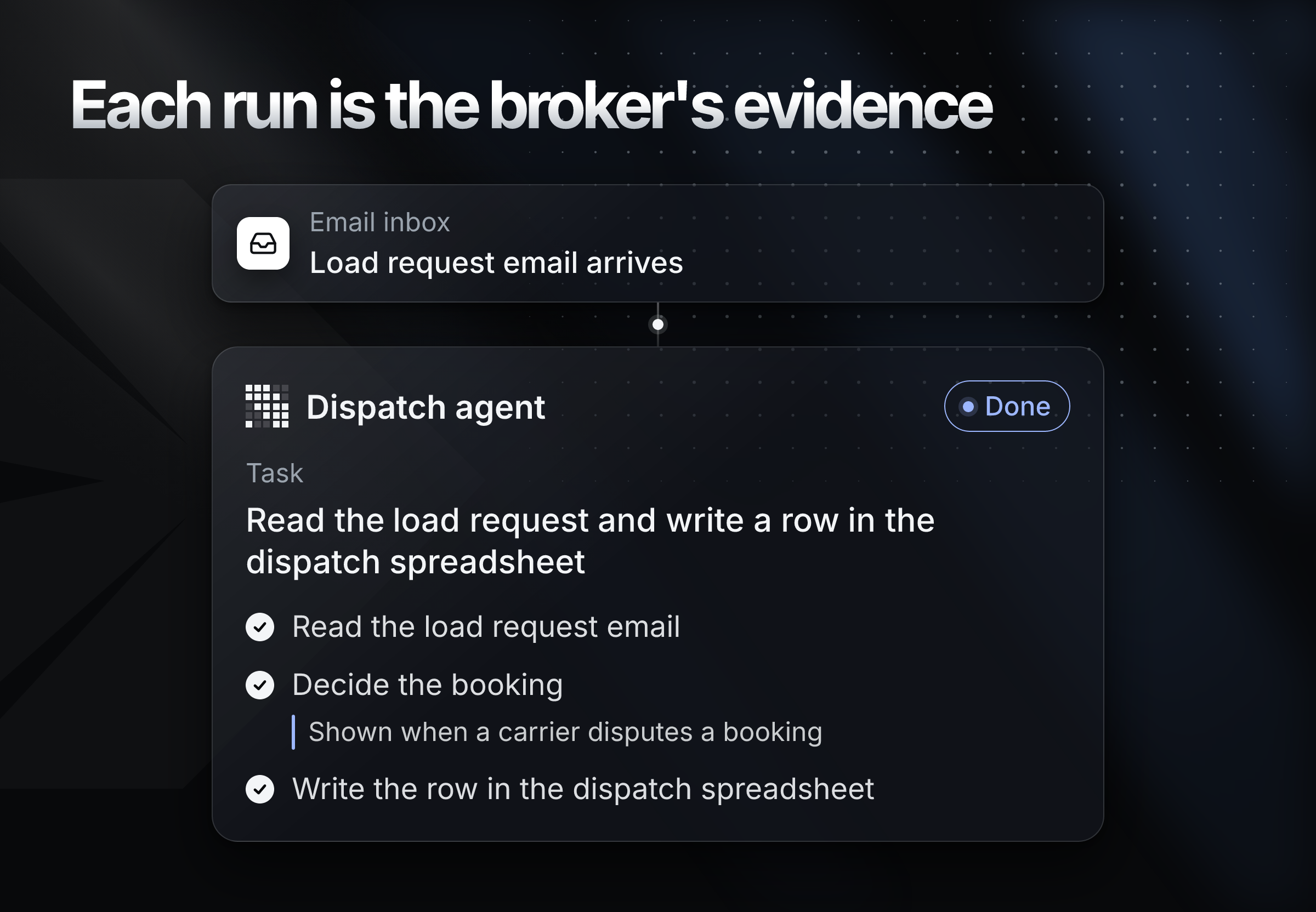
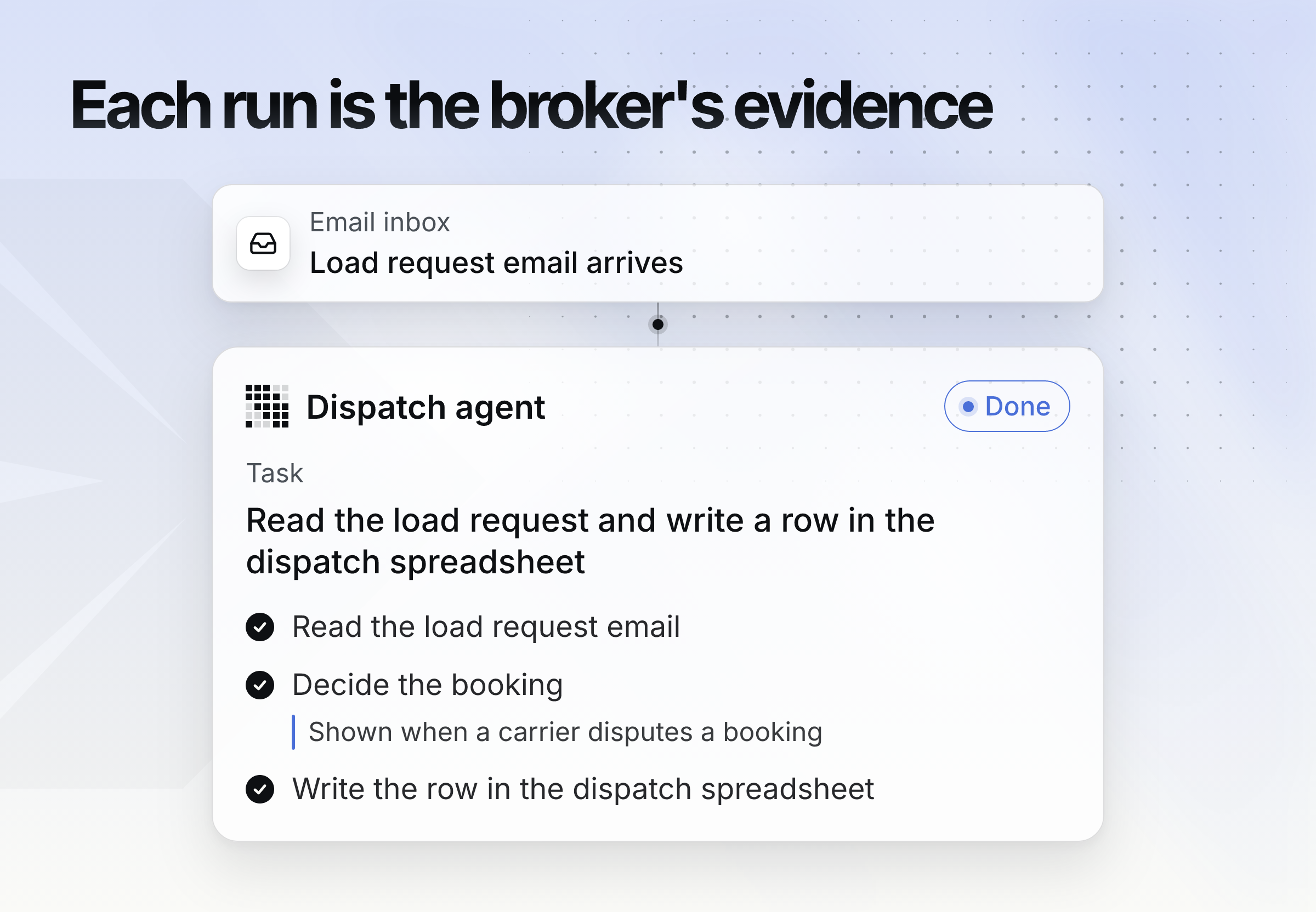
It matters more in a dispute. A freight brokerage of about 30 people, also invented, has an agent that reads load request emails and writes rows in the dispatch spreadsheet. When a carrier disputes a booking, the operations lead needs to show what the agent read, decided and wrote. If that record sits with a builder who has moved on, the broker is asking someone else for its own evidence, and it goes when their account closes.
 ## How we would set an agent up on the first day
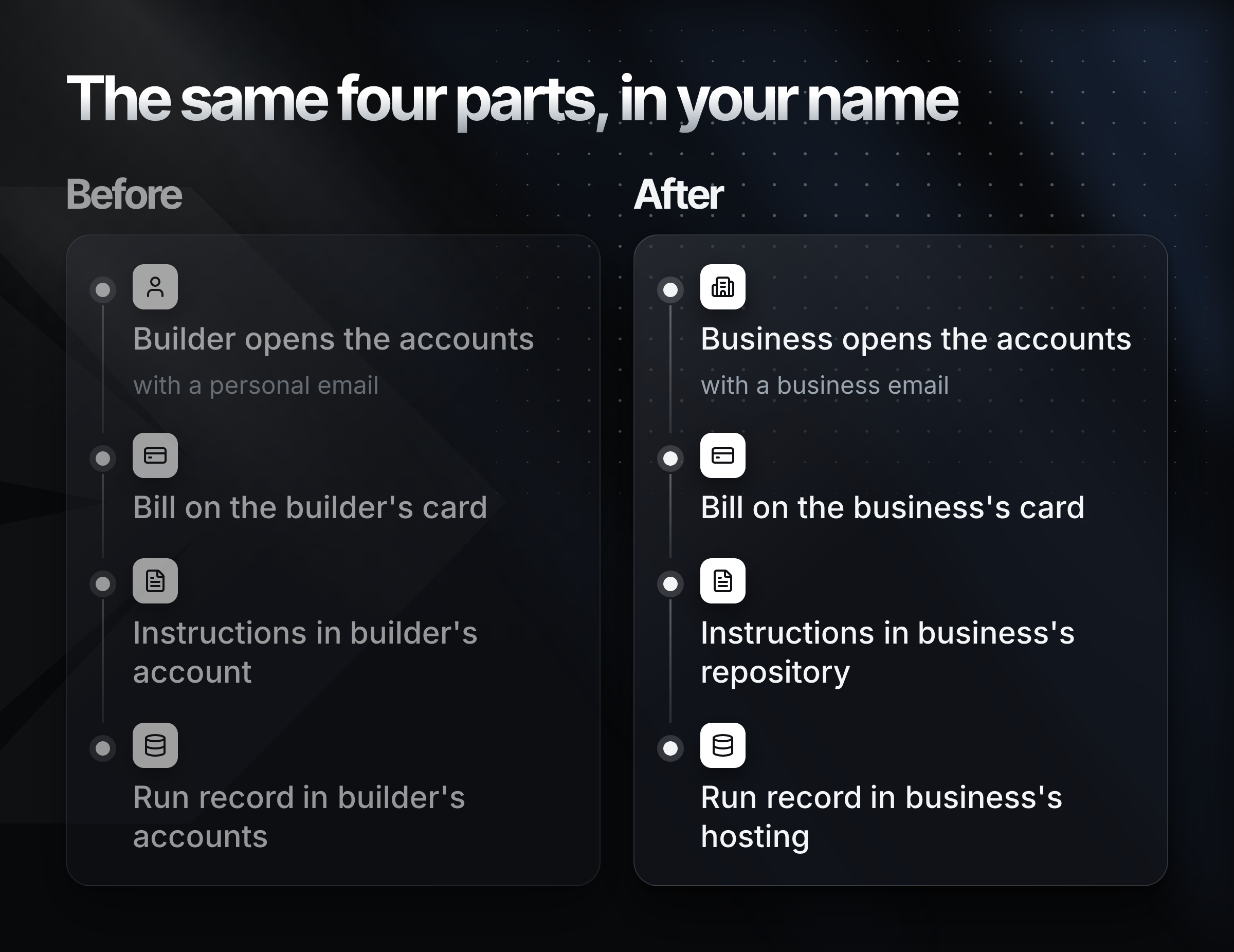
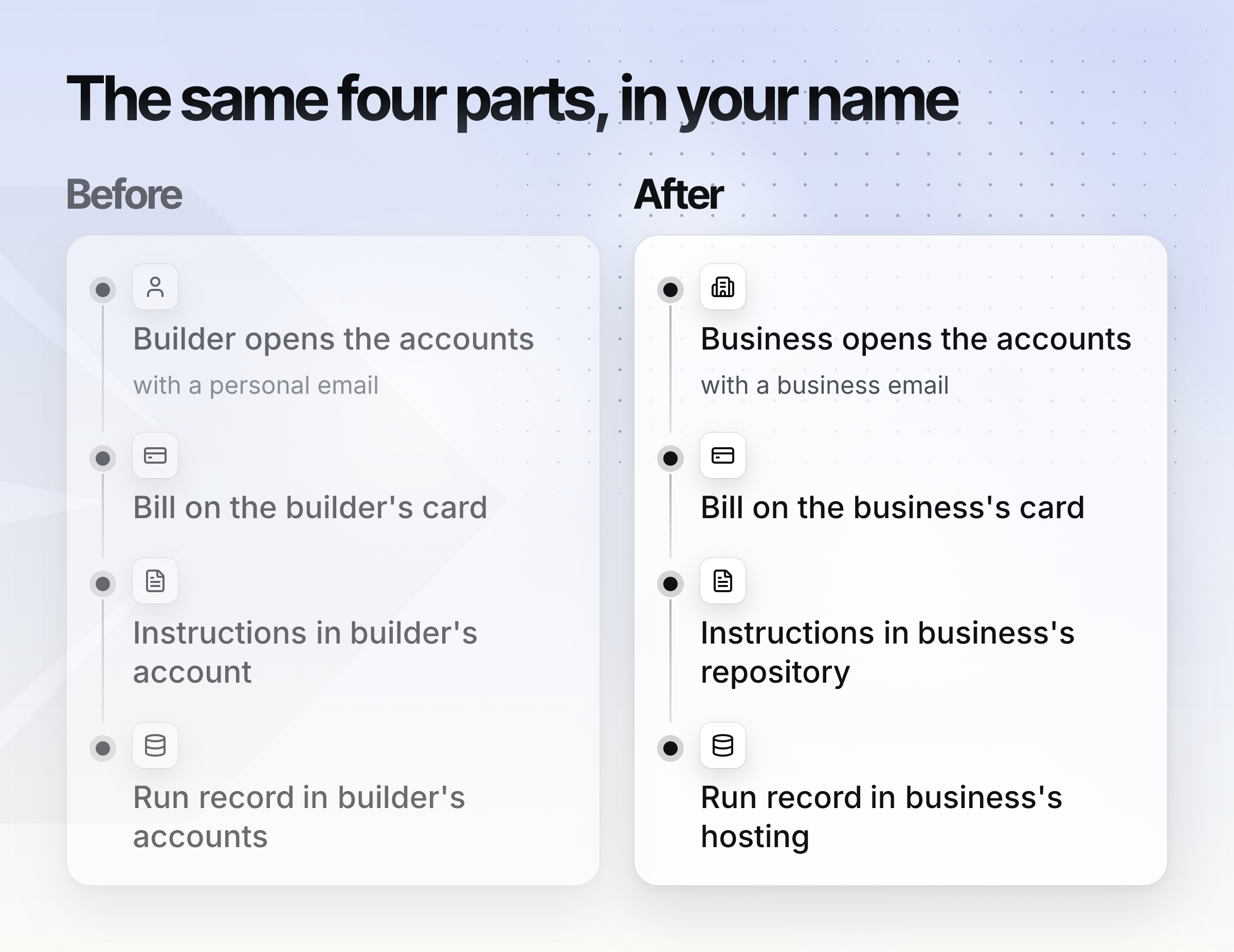
Before any build work, the business opens every account itself, with a business email address no single person owns and the business's card: the model account, the hosting, the automation service and the code repository (where the code and instruction files are kept). The builder is invited in as a user with the access the work needs, and at least two of the business's own people are administrators.
Each step's instructions are a readable file in that repository, with the rules the owner will change in a file of their own. Every run writes its record to the business's hosting. One documented switch turns the agent off, by stopping what starts it or revoking its key, and the owner tries it once before launch.
 ## What it costs to set up this way
A reasonable owner will call this paperwork: the builder knows the system best, a good one hands everything over when asked, and leaving it in their accounts is less to manage. But you ask for the handover after the builder has left, raised the price or stopped answering, and even a willing builder has to reconnect every tool to move an account, and may lose its history on the way. On day one the same request costs a few logins.
It still costs you. Opening the accounts takes an hour or two, and after that you pay several bills instead of one invoice, keep two of your own people holding the logins, and add and remove builders as users. A builder may license its own reusable tools to you instead of handing them over, so ask which parts those are.
## A check you can run this week without the builder
An agent is yours in practice if you can do these alone:
- Sign in to every account it runs on with a business email, and see the bill on the business's card.
- Open its instructions and change one line.
- Read last week's record of what it did and why, and switch it off and on again.
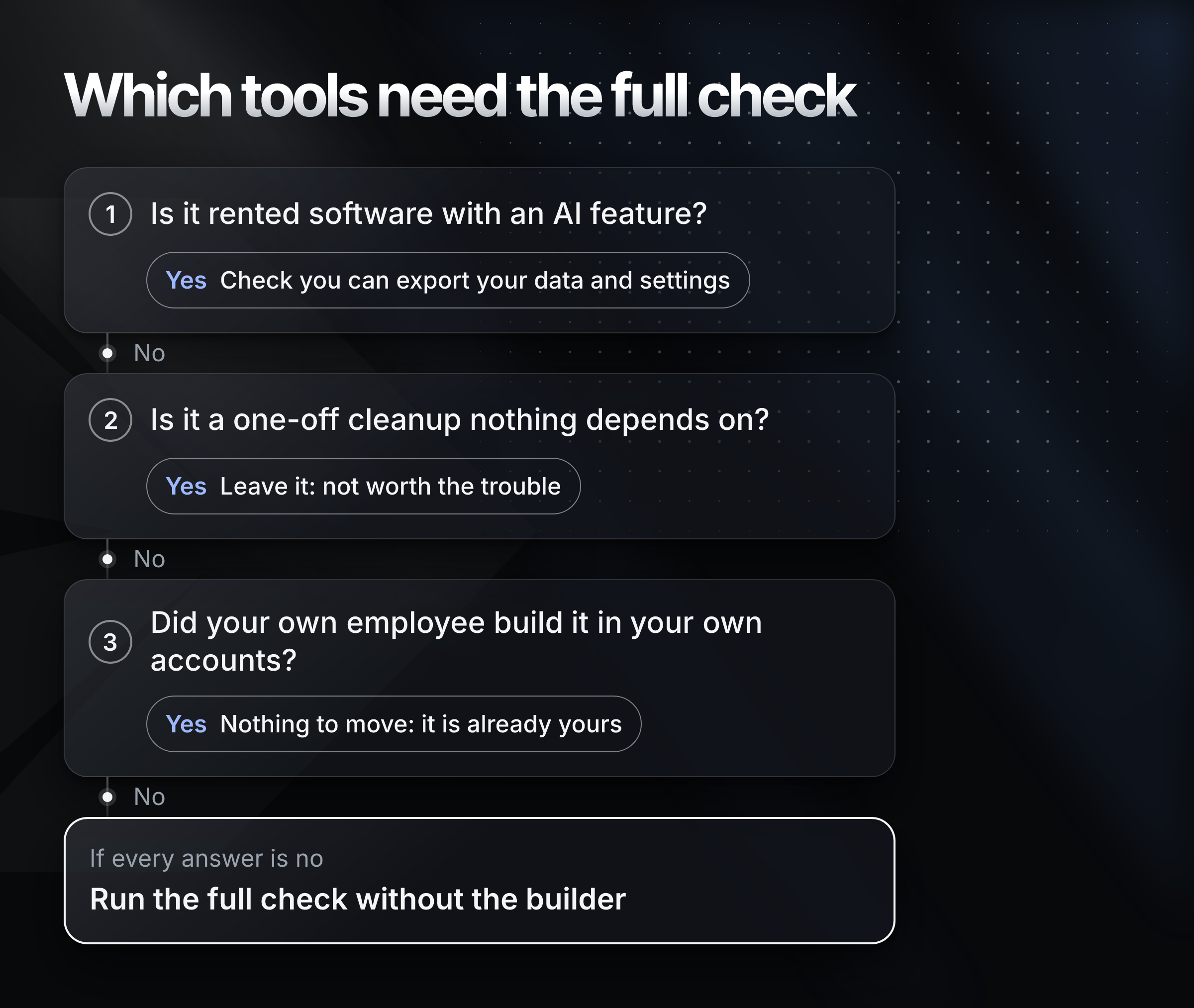
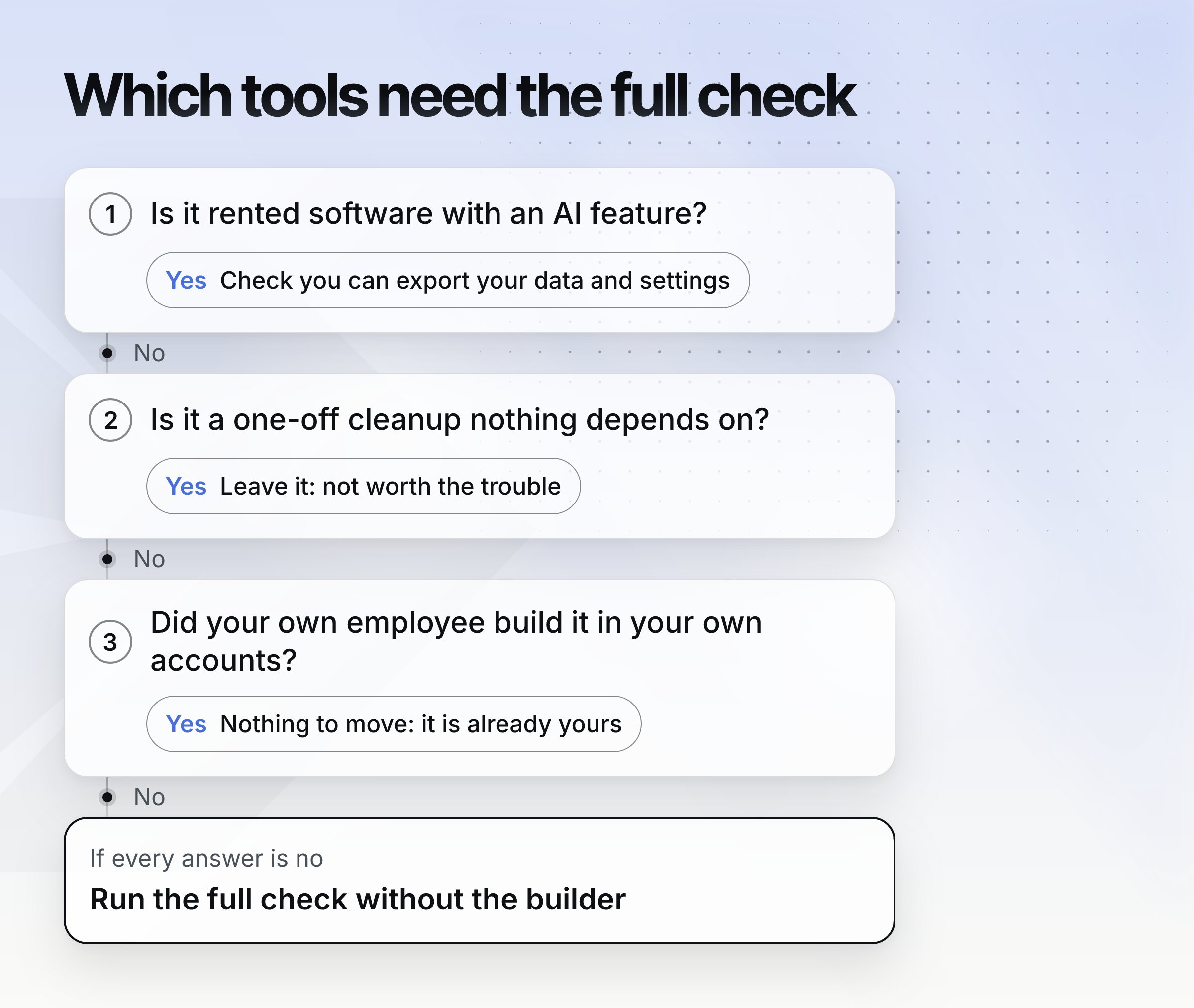
An agent that fails any of them is the builder's in practice, even if the contract says otherwise. Rented software with an AI feature, such as a helpdesk or accounting tool, is the vendor's by design, and there the check shrinks to one item: export your data and settings. A one-off cleanup nothing depends on is not worth the trouble, and an agent your own employee built inside your own accounts is already yours, since an employee's work in their regular duties belongs to the employer.
 If your agent fails, the remaining decision is when to move it into your name: while the builder still answers and can help reconnect each tool, or after something has gone wrong, when the builder may not reply.
## Sources
- [Works Made for Hire (Circular 30)](https://www.copyright.gov/circs/circ30.pdf), U.S. Copyright Office, 2024
---
© 2026 Dartnox. Read online at https://dartnox.com/blog/ai-agent-you-paid-for-may-not-be-yours


